
Summary
A boat wrap is often a better fit when you want custom graphics, a faster visual update, or a removable finish above the waterline. Marine paint may be better when the vessel needs surface restoration or you want a permanent coating.
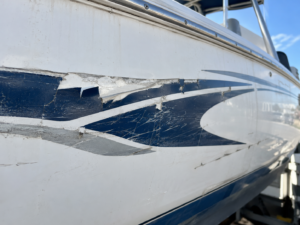
Your decision should account for the existing surface, required repairs, desired design, maintenance expectations, and how long you plan to keep the finish. A wrap can cover a sound surface, but it cannot correct peeling paint, cracks, oxidation, or structural damage.
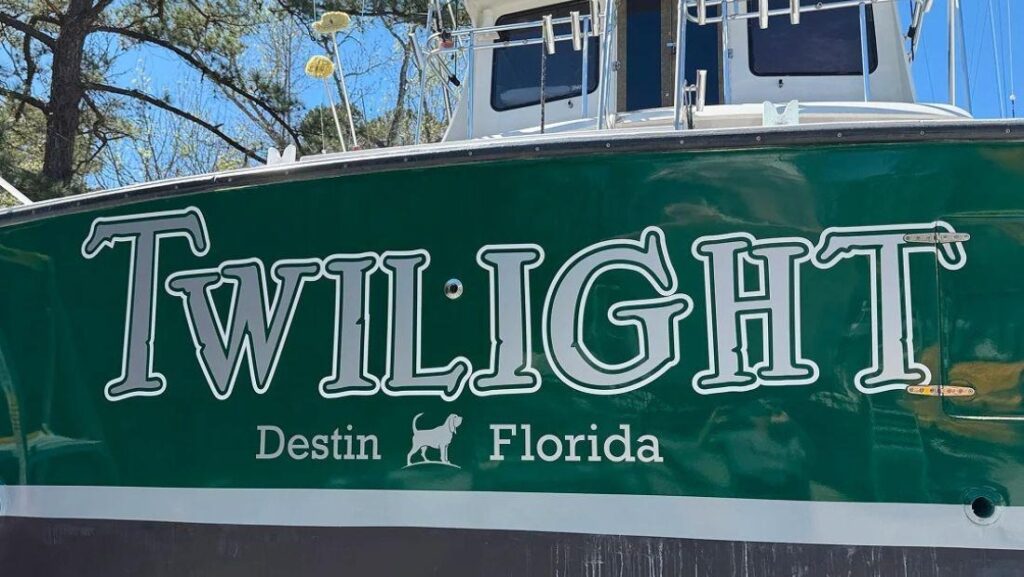
Vintage Marine Graphics focuses on partial wraps, transom wraps, lettering, striping, and custom marine graphics designed around each vessel.
Choosing between a boat wrap and paint starts with the condition of your vessel. Both options can change its appearance, but they solve different problems.
Vinyl works best on a smooth, clean, stable, and compatible surface. It can add lettering, artwork, striping, branding, or a targeted color change without making the design permanent. Paint involves a coating system and may be more appropriate when the surface needs sanding, fairing, priming, or extensive refinishing.
This comparison focuses on exterior areas above the waterline. Antifouling paint and other bottom-coating systems have separate purposes and requirements.
Quick Summary:
- A boat wrap typically costs less than a professional paint job.
- Vinyl boat wraps offer more design flexibility and custom graphics.
- Marine paint generally lasts longer than a vinyl wrap.
- Most boat owners choose wraps because they balance appearance, protection, and value.
Written by Vintage Marine Graphics
At Vintage Marine Graphics, we have worked with fishing boats, center consoles, charter vessels, and recreational boats that needed a fresh new appearance. Throughout those projects, one question comes up repeatedly: boat wrap vs paint, which one is better?
Our team has seen firsthand how a quality wrap can completely transform a vessel while preserving the original gelcoat underneath. We have also worked with owners who chose repainting because their long-term goals made more sense for a permanent finish. The right choice depends on the boat, the budget, and the intended use.
What Is the Difference Between a Boat Wrap and Paint?
A boat wrap uses adhesive-backed vinyl film installed over a compatible exterior surface. The vinyl may contain a solid color, printed artwork, a boat name, company branding, striping, or other custom graphics.
Marine paint is a coating system applied to a properly prepared surface. Depending on the project, painting may involve cleaning, sanding, repairs, fairing, priming, multiple coating stages, and curing time. Surface preparation can represent most of the work involved in achieving a professional painted finish.
The main difference is that vinyl changes the visible surface without becoming a permanent part of it. Paint creates a more permanent finish and may be incorporated into a larger restoration or refinishing project.
Neither option should be used to hide untreated damage.
Boat Wrap vs. Marine Paint Cost & Feature Comparison
| Factor | Vinyl Wrap or Marine Graphics | Marine Paint |
|---|---|---|
| Best use | Lettering, artwork, branding, striping, partial coverage, and removable design changes | Permanent color changes, restoration, refinishing, and repaired surfaces |
| Existing surface | Must be smooth, clean, stable, and compatible | May be incorporated into a larger repair and refinishing process |
| Design options | Printed artwork, logos, gradients, patterns, textures, and solid colors | Solid colors, custom-painted graphics, stripes, and high-gloss finishes |
| Installation time | Often shorter once the surface and artwork are ready | Often longer because of preparation, coating stages, and curing |
| Maintenance | Gentle washing and regular inspection of edges and seams | Maintenance depends on the specific coating system |
| Repairs | A damaged graphic section may sometimes be replaced | Repairs may require sanding, color matching, and blending |
| Future changes | Can often be removed or replaced professionally | Changing the finish normally requires sanding or repainting |
| Protection | May provide limited cosmetic protection in covered areas | Creates a durable coating over the prepared surface |
| Structural repair | Does not repair cracks, failed coatings, or damaged laminate | Damage must still be repaired before the coating system is applied |
| Below the waterline | Most graphic-wrap systems are intended for approved above-waterline applications | Separate marine coatings are available for topsides and underwater areas |
Why Boaters in Florida Prefer Wraps
- Fierce Environment: Florida’s intense UV rays and saltwater are harsh on hulls. Vinyl acts as a sacrificial layer that protects the underlying gelcoat.
- Downtime: The ability to get your boat back on the water in under a week is crucial compared to the weeks required for painting.
Which Costs Less?
A partial wrap or targeted marine graphic will often have a lower upfront cost than a complete professional repaint. However, the final price depends on more than the material placed on the boat.
Important cost factors include:
- Coverage area
- Boat length and hull shape
- Custom artwork
- Surface condition
- Existing vinyl removal
- Hardware and access panels
- Installation access
- Required surface repairs
- Material and laminate selection
Vinyl will not remove the cost of correcting oxidation, loose paint, cracks, adhesive residue, or other conditions that prevent proper adhesion. Those issues must be addressed before installation.
For a detailed breakdown of these variables, read the boat wrap cost guide
Which Lasts Longer?
Marine paint is generally selected when you want a permanent, long-term finish. Its service life depends on the coating system, application quality, exposure, storage, and maintenance.
The service life of vinyl also varies. Important factors include:
- Exact film and laminate
- Manufacturer rating
- Sun exposure
- Horizontal or vertical placement
- Salt and contaminant buildup
- Storage conditions
- Edge sealing
- Installation quality
- Cleaning habits
Ask your graphics provider to identify the exact film system and explain its expected outdoor durability for your application. Avoid choosing a product based only on a general claim that every marine wrap lasts the same number of years.
Which Is Easier to Maintain?
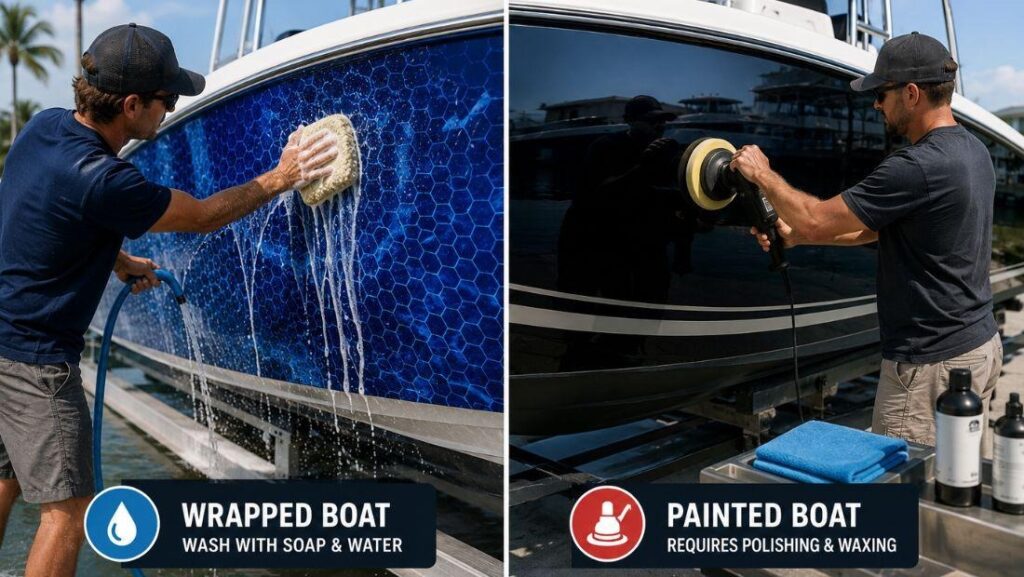
Many boat owners appreciate wraps because they simplify maintenance. Dirt, salt, and debris can usually be removed using marine-safe soap and water without specialized products.
Painted surfaces often require more attention over time. Exposure to sunlight and water may lead owners to perform polishing and buffing to maintain a glossy appearance.
Boat Wrap Maintenance Tips
- Wash regularly with marine-safe soap
- Remove bird droppings quickly
- Avoid abrasive cleaning products
Marine Paint Maintenance Tips
- Schedule routine polishing
- Wax-exposed surfaces
- Address oxidation early
Which Is Easier to Repair?
Damage happens. Whether your boat encounters a dock, floating debris, or an accidental scrape, repairs become an important consideration.
One major advantage of a wrap is that damaged sections can often be replaced individually. A paint repair may require color matching and repainting a larger visible area to create a seamless appearance.
Common Repair Scenarios
| Situation | Wrap | Paint |
| Minor Scratch | Replace Section | Repaint Area |
| Logo Change | Replace Graphics | Repaint |
| Color Change | New Wrap | Full Repainting |
| Dock Damage | Partial Repair | Extensive Repair |
Why Repairs Matter
Repair costs can significantly affect ownership expenses. Because sections can be replaced individually, many owners find wraps easier and less expensive to maintain.
Which Looks Better?
Appearance is subjective, so the answer varies. Some yacht owners prefer the deep glossy finish of traditional paint, while others enjoy the flexibility offered by vinyl.
Today’s vinyl boat wraps can create matte, metallic, satin, and high-gloss finishes. They can also include custom graphics, logos, patterns, and unique branding elements that traditional paint cannot easily achieve.
When Paint Looks Best
Paint often works well for:
- Luxury yacht restorations
- Permanent color changes
- High-end custom projects
When Wraps Turn Heads
Wraps excel when owners want:
- Bold graphics
- Brand visibility
- Custom logos
- Unique style
Does a Boat Wrap Protect Your Hull?
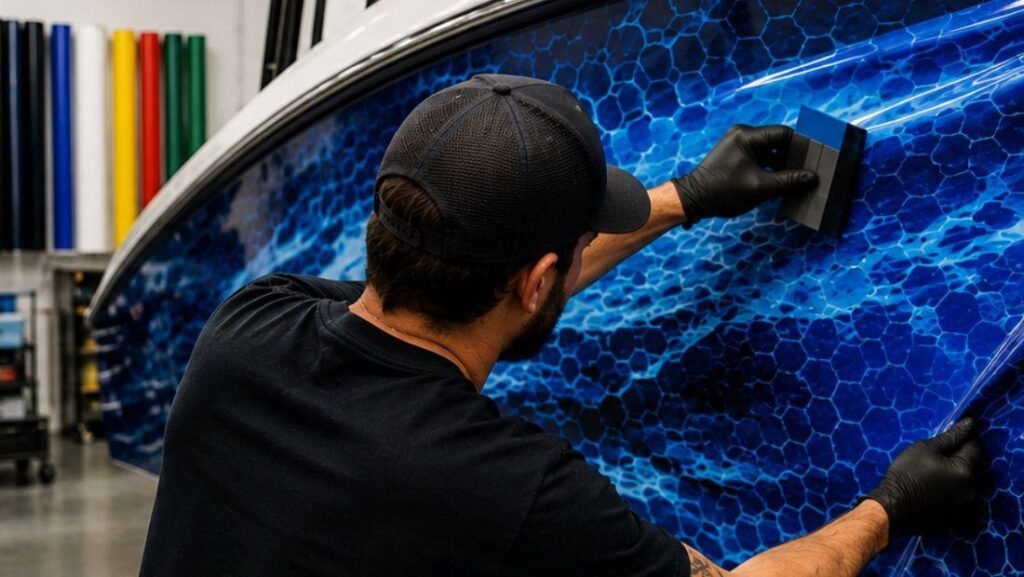
Yes. A quality wrap adds an extra layer between the environment and your boat’s original surface. This layer helps protect against UV exposure, minor abrasions, and everyday wear.
In many cases, a boat vinyl wrap helps preserve the existing paint or gelcoat underneath. When the wrap is removed years later, the original finish often remains protected from sun damage and weather exposure.
Additional Protection Benefits
- UV-resistant materials
- Reduced fading
- Minor scratch protection
- Gel coat preservation
Does a Boat Wrap Affect Resale Value?
Resale value matters to many boat owners. While a wrap does not automatically increase value, it can help preserve the condition of the original finish underneath.
Potential buyers often appreciate a well-maintained hull. If the underlying gelcoat remains protected, owners may find it easier to sell their vessel in the future.
Why Buyers Like Protected Finishes
A preserved surface often creates a stronger first impression. Buyers may also view the boat as better maintained when the original finish remains covered and protected.
When Is Paint the Better Choice?
Although wraps offer many benefits, paint remains the right choice in certain situations. Owners planning to keep a vessel for decades may prefer the added longevity of a professional paint application.
Similarly, classic restorations and luxury yachts sometimes benefit from a premium paint finish. In those cases, the appearance and permanence of paint may outweigh the higher cost.
Paint May Be Better If:
- You want maximum longevity
- You prefer a permanent finish
- You are restoring a classic yacht
- You plan extensive hull restoration work
When Is a Boat Wrap the Better Choice?
For most recreational vessels, wraps provide the best combination of value, flexibility, and protection. They allow owners to create a custom appearance without committing to permanent changes.
Many boat owners also appreciate the ability to update graphics, change branding, or refresh their style later. This flexibility makes wraps especially attractive for charter operations and commercial vessels.
A Wrap Makes Sense If:
- Custom graphics and branding are a priority.
- Faster installation and less downtime matter.
- Lower upfront costs fit your budget.
- Future design changes are likely.
- Preserving the existing paint or gelcoat is important.
Boat Wrap vs Paint: Which Is Better for Different Types of Boats?
The choice depends on how you use your vessel and what results you expect.
| Boat Type | Recommended Option |
| Fishing Boat | Wrap |
| Center Console | Wrap |
| Charter Boat | Wrap |
| Commercial Vessel | Wrap |
| Luxury Yacht | Depends |
| Classic Restoration | Paint |
| Tournament Boat | Wrap |
Why Fishing Boats Favor Wraps
Fishing boats often benefit from custom graphics, sponsor logos, and frequent design changes. A wrap provides flexibility while protecting the hull.
Why Classic Restorations Favor Paint
Restoration projects often prioritize authenticity and permanence. Traditional paint usually aligns better with those goals.
Expert Tip
If you plan to sell your boat within several years, consider a wrap before repainting. A professionally installed boat wrap protects the original finish while allowing you to create a custom look today. For many boat owners, that combination of protection, flexibility, and lower upfront cost makes a wrap the smarter investment.
Conclusion
When comparing boat wrap vs paint, which one is better, there is no universal answer. The choice depends on your budget, style preferences, maintenance expectations, and long-term plans.
Marine paint offers outstanding longevity and a permanent finish. However, vinyl boat wraps provide greater flexibility, lower cost, easier repairs, and endless design possibilities. For many boat owners, a quality wrap delivers the best balance of appearance, protection, and value while helping their vessel stand out on the water.
FAQs
Can a boat wrap peel?
Poor installation can cause seams or adhesive issues. Professional installation significantly reduces the risk of peeling.
Can vinyl boat wraps be removed?
Yes. A professional can remove the vinyl without damaging the underlying surface when installed correctly.
Can wraps be installed over existing paint?
Yes. As long as the existing paint remains in good condition, a wrap can often be applied directly over it.