
Summary
Custom boat lettering includes boat names, registration numbers, hailing ports, logos, and decals designed to fit a specific vessel. The right choice depends on the surface, available space, viewing distance, material, and intended use, with marine-grade vinyl, printed graphics, stainless steel, and illuminated lettering serving different needs. A scaled proof, accurate measurements, and proper surface preparation help the finished design remain readable, balanced, and durable.
Custom boat lettering includes boat names, registration numbers, hailing ports, logos, and decorative decals designed for a specific vessel. Each element serves a different purpose. Boat names express identity, while official numbers follow legal rules. Decals support detailed artwork, branding, and multicolor designs.
Quick Summary
- Custom boat lettering can include names, numbers, hailing ports, logos, boat striping, and decals.
- Boat names allow more creative freedom than official registration markings.
- Cut vinyl suits clean text, while printed decals handle detailed colors and artwork.
- The best result depends on surface condition, scale, placement, and viewing distance.
Written by the Vintage Multimedia Team
Vintage Marine Graphics focuses exclusively on marine lettering, graphics, original artwork, and custom fabrication. Founder Kim Sutton lettered his first boat at age 16. He has nearly five decades of experience with hand-painted, vinyl, printed, stainless, and illuminated marine work.
That experience shapes how the team approaches each vessel. Rather than forcing one template onto every boat, the team reviews its hull, transom, surface, and intended viewing angle. Projects may involve simple registration numbers, custom boat names, printed decals, or dimensional metal letters.
What Counts as Custom Boat Lettering?
Custom boat lettering covers words, numbers, and visual marks added to a vessel for identification or design. It may include a boat name, registration number, hailing port, company logo, or decorative graphic.
The category also includes several production methods. Cut vinyl creates individual letters, while printed vinyl supports gradients and detailed artwork. Stainless steel adds depth, and illuminated letters increase nighttime visibility.
Lettering Versus Graphics
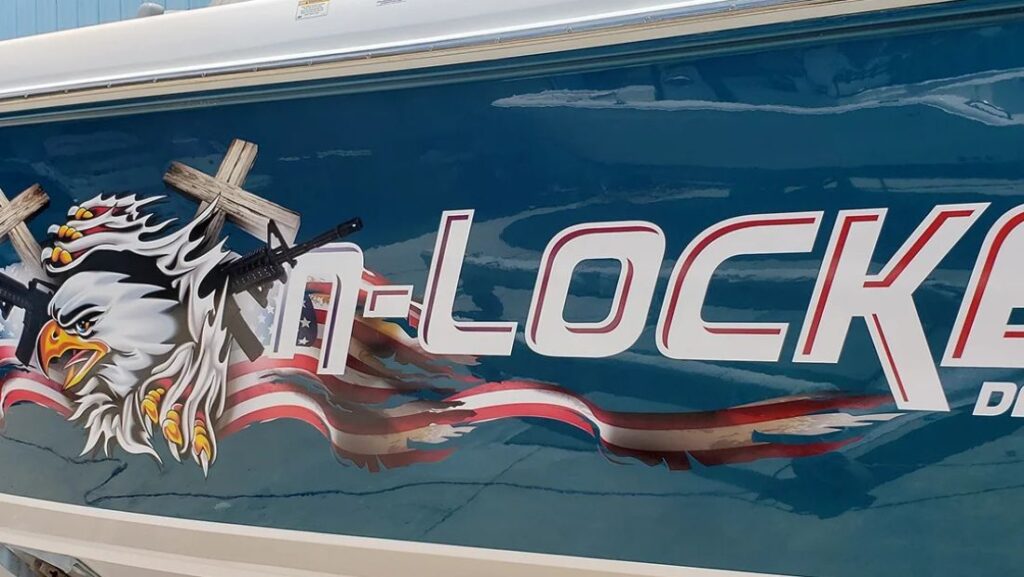
Lettering uses words, letters, or numbers as the main design element. Boat graphics may include illustrations, patterns, stripes, logos, backgrounds, and color effects.
Lettering Versus Decals
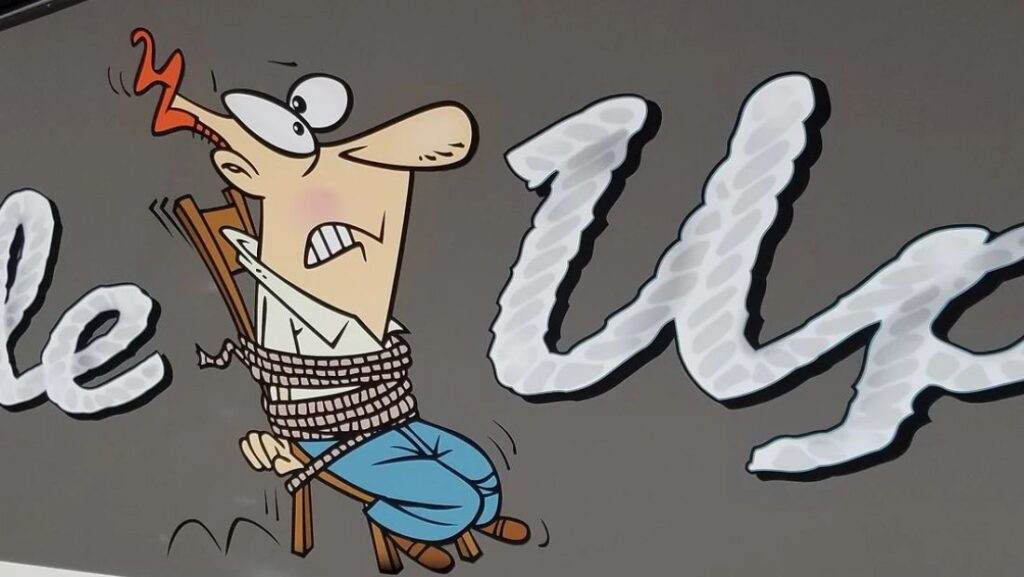
A lettering set may contain separate pre-spaced characters. A printed decal usually combines several colors and design elements into one applied graphic.
What Is Boat Name Lettering?
Boat name lettering displays a chosen name on the transom, hull side, stern, or cabin. Owners often use it to express family history, humor, fishing interests, or a vessel’s character.
Custom boat lettering can keep the name simple or turn it into a complete identity. A clean font may suit a classic cruiser. Illustrated lettering may better fit a tournament boat or charter vessel.
Where Can a Boat Name Go?
Common locations include the transom, hull sides, stern area, or cabin structure. The best position depends on available space, hardware, body lines, and viewing distance.
How Much Creative Freedom Does a Boat Name Allow?
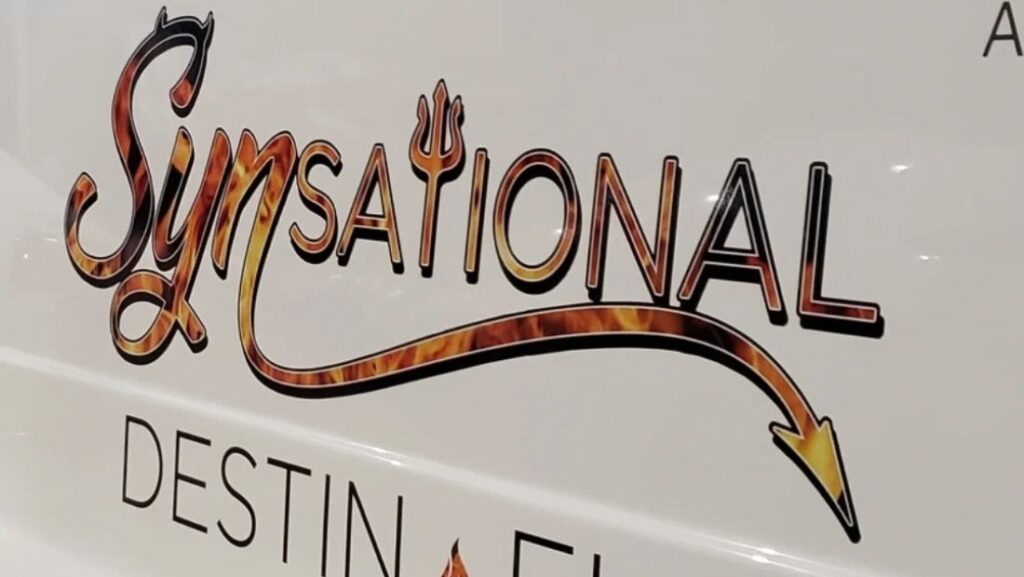
Boat names can use scripts, shadows, outlines, metallic effects, layered vinyl, printed textures, or custom artwork. However, readability should still guide every design choice.
How Are Registration Numbers Different From Boat Names?
A state agency assigns boat registration numbers for official identification. Owners cannot freely change the character sequence or treat it like decorative boat lettering.
Rules for size, spacing, placement, and contrast vary by jurisdiction. Therefore, keep official markings separate from decorative names and graphics. Florida owners can review our complete guide to Florida boat registration number requirements.
Can Registration Numbers Match the Boat?
Yes, but the design must remain compliant. A suitable solid color and clean block font can complement the hull without reducing readability.
What Is Hailing-Port Lettering?
A hailing port appears with the name of a federally documented vessel. It identifies the approved place and state connected with the vessel’s documentation.
For vessels federally documented exclusively for recreation, the vessel name and hailing port must appear together on a clearly visible exterior part of the hull. The markings must be durable, legible, and at least four inches high. Review the U.S. Coast Guard vessel marking requirements before production.
Is a Hailing Port the Same as a Home Marina?
Not necessarily. A hailing port serves a documentation purpose and does not simply identify the boat’s current slip or marina.
What Are Custom Boat Decals?
Custom boat decals are adhesive graphics created for logos, artwork, branding, names, or smaller identification elements. They work well when a design needs several colors, gradients, fine lines, or illustrated details.
Printed decals can support charter branding, fishing artwork, sponsorship marks, and replacement graphics that match the vessel’s existing style. Domed decals add a raised resin finish for smaller logos or premium accents.
What Are Domed Decals?
Domed decals use a clear resin layer to create depth and gloss. They suit compact logos, badges, console marks, and small nameplates.
Which Material Should You Choose?
The best material depends on the design, boat surface, budget, exposure, and desired appearance. No single option works equally well for every vessel.
Custom boat lettering often uses marine-grade vinyl because it supports clean production and efficient installation. However, printed graphics, stainless letters, and illuminated systems serve different design goals.
| Material | Best use | Main advantage | Main limitation |
| Cut marine vinyl | Names, simple lettering, and numbers | Clean edges and efficient production | Limited for detailed artwork |
| Printed marine vinyl | Logos, gradients, and illustrations | Supports detailed colors and graphics | Needs suitable printing and finishing |
| Domed decal | Small logos and accents | Raised, glossy appearance | Less practical for large layouts |
| Painted lettering | Classic or restoration work | Traditional handcrafted look | Requires skilled labor |
| Stainless steel | Premium names and stern lettering | Dimensional, refined finish | Higher cost and complex mounting |
| Illuminated lettering | Yacht names and stern displays | Strong nighttime visibility | Needs electrical coordination |
Does Every Vinyl Work on Every Hull?
No. Surface compatibility depends on paint, gelcoat, aluminum, texture, wax, oxidation, and existing coatings. Film manufacturers also specify approved surfaces and application limits.
Review the product maker’s instructions before choosing a vinyl. For example, 3M’s watercraft application guidance addresses surface preparation and unsuitable substrates.
How Should You Choose a Font?
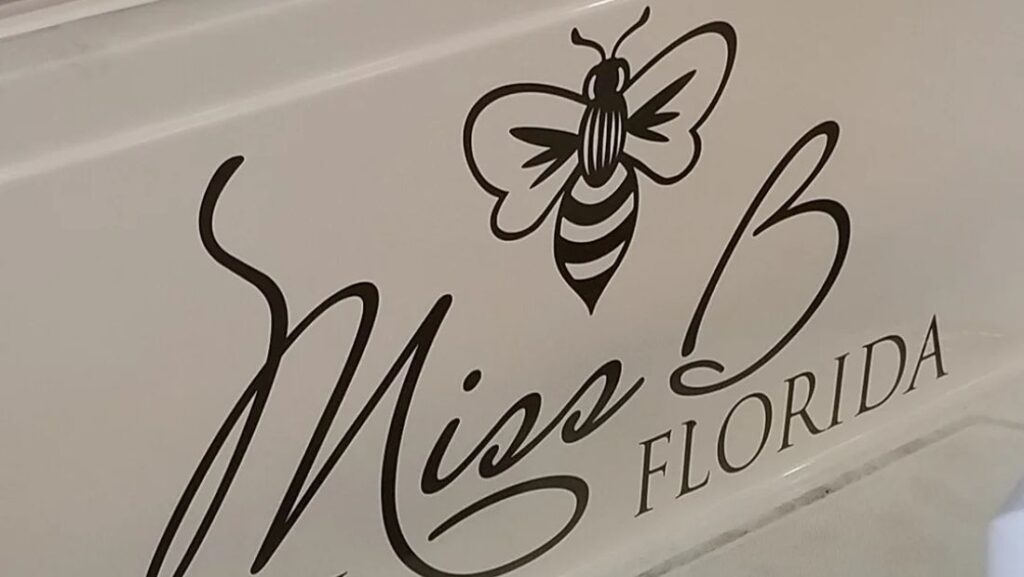
Choose a font that fits the boat’s character and remains readable from the intended viewing distance. Thin scripts may look elegant on screen but disappear across a marina.
Bold serif lettering may suit a classic cruiser. Slanted block letters can complement a performance boat. Handcrafted artwork can give a sportfish vessel a distinct identity.
When Does a Font Become Too Decorative?
A font becomes impractical when flourishes hide letters, spacing feels crowded, or strokes appear too thin. Test the complete name at full size before approval.
How Should Colors and Effects Work Together?
Strong contrast helps custom boat lettering remain visible against the hull or transom. The design should also work beside factory striping, windows, vents, rails, and existing graphics.
Metallic colors can add depth, while shadows can separate decorative names from the background. However, too many effects may make a small design feel crowded. View every proof at the expected production size.
Can Reflective Vinyl Work on a Boat?
Reflective vinyl may suit selected identification or accent applications. However, glare and lighting can change its appearance. Test the material under direct sun and low light.
Where Should Boat Lettering Be Placed?
Placement depends on the lettering type and the vessel’s shape. A boat name often belongs on the transom or hull side. Logos may work on the cabin, console, or side panels.
Registration numbers must appear in the location, size, spacing, and color contrast required by the applicable state authority. Hailing ports follow federal documentation rules when applicable. Decorative decals need clear space away from hardware, waterlines, and heavy abrasion.
What Can Interfere With Placement?
Rub rails, vents, cleats, ladders, doors, windows, and strong curves can reduce usable space. A straight-on photo and accurate measurements reveal these limits early.
Should You Install Boat Lettering Yourself?
Small pre-spaced vinyl lettering may suit careful self-installation on a clean, accessible, and smooth surface. Good alignment still requires measuring, surface preparation, and suitable weather.
Professional installation makes more sense for large graphics, layered designs, curved surfaces, stainless letters, or illuminated systems. These projects may require templates, mounting access, electrical planning, and specialized adhesives.
When Does DIY Installation Become Risky?
DIY work becomes risky when oxidation, wax, strong curves, poor access, or large layouts affect adhesion. Errors can damage the graphic or create uneven spacing.
What Information Should You Provide Before Ordering?
Good project details help a designer create accurate custom boat lettering without unnecessary revisions. Start with the exact wording and clear vessel photographs.
Measurements also matter because camera angles can distort scale. Vintage Marine Graphics asks customers to provide sizing, color, font, surface, placement, and project details before production.
- Exact boat name, registration number, or hailing port
- Boat make, model, length, and clear surface photos
- Available width, height, hull color, and surface material
- Preferred font, colors, finish, and installation location
- Shipping, installation, and completion details
Why Are Straight-On Photos Important?
Angled photos can make one side look wider than the other. A straight view helps the team judge balance, scale, and nearby obstructions.
How Much Does Custom Boat Lettering Cost?
Price depends on size, material, colors, artwork, surface preparation, and installation access. Simple vinyl names usually cost less than custom illustrations or fabricated metal systems.
A project may also cost more when it needs logo development, layered production, removal, repairs, or electrical work. Request a project-specific quote instead of relying on a generic online price.
What Usually Raises the Price?
Original artwork, large dimensions, multiple finishes, complex mounting, and difficult access add production time. Last-minute changes can also increase labor.
How Long Does Boat Lettering Last?
Lifespan depends on material quality, UV exposure, salt, cleaning, installation, and storage. A well-produced graphic can still fail early on a waxed or oxidized surface.
Routine freshwater rinsing and gentle cleaning can help preserve its appearance. Avoid abrasive tools, aggressive solvents, and direct pressure along vinyl edges.
Because service-life ratings vary by vinyl series, print system, laminate, exposure, and installation surface, ask which exact material will be used and what outdoor durability the manufacturer assigns to it. Vintage Marine Graphics can provide the expected service-life range for the selected system before production.
What Causes Early Failure?
Poor surface preparation causes many adhesion problems. Other risks include incompatible film, trapped contamination, sharp curves, abrasion, and incorrect installation temperatures.
What Mistakes Should Boat Owners Avoid?
The most frequent mistake involves choosing a design before measuring the available surface. Another problem occurs when decorative styling reduces readability from the dock.
Some owners also treat registration numbers like unrestricted artwork. Others order custom boat decals from a close-up photo without checking body lines, hardware, or overall scale.
Why Does a Scaled Proof Matter?
A scaled proof shows how the final design relates to the actual boat. It can reveal weak contrast, poor spacing, and oversized effects before production.
How Do You Begin a Custom Boat Lettering Project?
Start by deciding what the vessel needs: a name, official numbers, a hailing port, decals, or a complete identity. Then gather photographs, measurements, and style references.
Next, review the options with a marine lettering team. For a simple name or number, visit Order Lettering With Design Support. For larger work, review Marine Lettering and Identification.
Frequently Asked Questions About Custom Boat Lettering
How do I determine the best size for my lettering?
Measure the available width and height on the hull or transom, including space around rails, vents, and hardware. Choose lettering that remains readable from the dock without crowding the surrounding surface.
Is the lettering easy to install?
Small, pre-spaced vinyl lettering is usually manageable on a clean, smooth, and accessible surface. Larger graphics, curved areas, layered designs, and difficult placements may require professional installation.
Can I use a font that is not available in the Boat Name Designer?
Yes. You can request another font or share a reference showing the style you prefer. The design team can review its readability and suitability for marine production.
Can you create a boat name in an arch or add another effect?
Yes. Boat names can follow an arch, curve, wave, shadow, outline, or layered layout when the surface allows it. The final effect should fit the vessel’s shape and keep the name easy to read.
Expert Tip
Before approving custom boat lettering, request a scaled proof placed over a straight-on photograph of the actual vessel. A standalone design can look balanced on screen but fail on the boat.
Check the proof from several viewing distances. Also inspect nearby vents, rails, ladders, and factory striping. This final review can prevent costly production changes.
Start Your Custom Boat Lettering Project
Send Vintage Marine Graphics a straight-on photo of your vessel, the available dimensions, exact wording, preferred colors, and placement details. The team can help you select a lettering method and develop a scaled design that fits the boat.