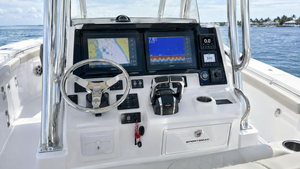

If your boat graphics are damaged after a hurricane, wait until the vessel is safe to access, document the affected areas, and inspect the lettering, decals, and wraps before attempting repairs. Scratched vinyl, peeling edges, torn graphics, and missing lettering may require cleaning, partial replacement, or a completely new application, depending on the condition of the material and the surface underneath.
With Hurricane Isaias approaching Florida’s Gulf Coast, boat owners throughout Northwest Florida may soon be assessing storm damage. Once conditions are safe, checking your vessel’s graphics can help you understand what can be restored and what needs professional attention.
Quick Summary
- Check the vessel first. Confirm it is safe to access before inspecting cosmetic damage.
- Identify damaged graphics. Look for torn vinyl, loose edges, scratched wraps, and missing lettering.
- Document the affected areas. Take clear photographs before cleaning or removing damaged materials.
- Choose the appropriate repair. Some graphics need only a section replaced, while others require complete removal and reapplication.
Written by the Vintage Marine Graphics Team
We’re the marine graphics division of Vintage Sign & Light, based in Valparaiso, Florida. Our work includes custom boat lettering, registration numbers, decals, hull graphics, partial and full wraps, original marine artwork, and specialty lettering systems.
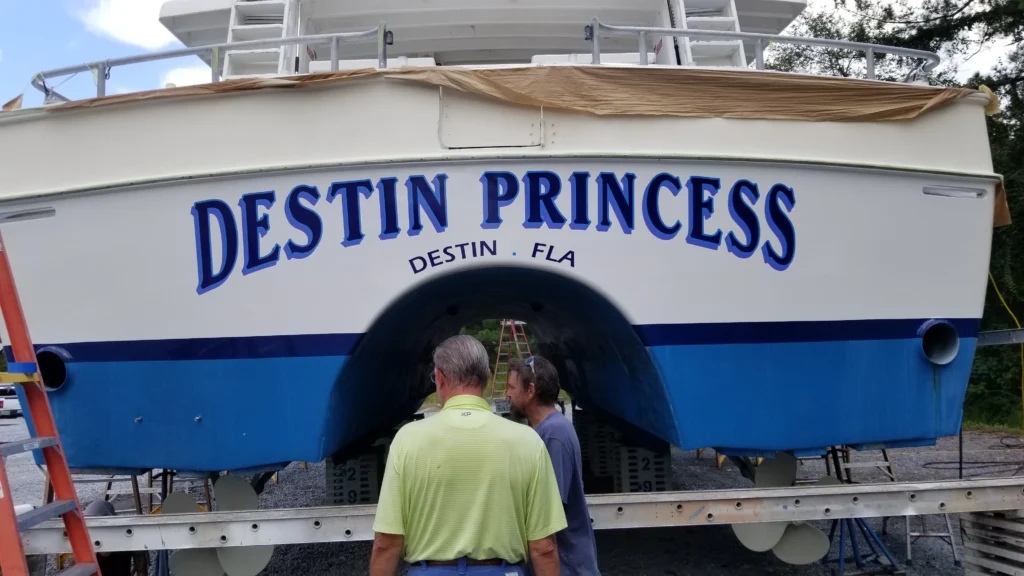
What Should You Do Immediately After Your Boat Sustains Storm Damage?
After a hurricane, confirm that your boat is safe to approach before checking its lettering or graphics. Structural problems, damaged electrical systems, unstable dock equipment, and debris should take priority over cosmetic restoration.
If your vessel was exposed to severe winds, waves, or floating debris, take these steps before making changes to its appearance.
1. Check the Boat’s Overall Condition
Look for visible hull damage, unusual positioning, loose dock hardware, and surrounding debris from a safe location. If the boat appears unstable, partially submerged, or severely damaged, contact a qualified marine professional before approaching or boarding it.
Boat graphics should only be assessed once the vessel is secure and accessible.
2. Document the Damage Before Cleaning
Photograph the affected hull, transom, and other graphic-covered areas. Include wide photographs of the vessel and close-ups showing the condition of individual graphics.
Record missing boat-name letters, torn wrap sections, scratches, lifted vinyl edges, and areas where the underlying finish is visible.
Keep previous project photographs, design files, and installation records if you have them. These can help when discussing replacement graphics or documenting storm-related losses.
3. Avoid Pulling Off Damaged Graphics
A loose section of vinyl may look easy to remove, but pulling it away can create additional problems. The film may tear unevenly, leave adhesive residue, or expose underlying surface damage.
Avoid using sharp tools, excessive heat, or unverified solvents to remove the material.
If the graphics have lifted substantially or could detach during operation, have a professional evaluate them before using the boat.
4. Contact a Marine Graphics Specialist
Once you’ve documented the damage, contact a marine graphics provider to discuss the affected areas.
Share photographs, your boat’s make and model, and any information about the original graphics. The specialist can help determine whether the existing design can be reproduced, whether a section can be replaced, or whether new artwork is appropriate.
What Types of Boat Graphics Damage Should You Look For?
Hurricanes can damage marine graphics through flying debris, physical impacts, abrasion, and prolonged exposure to harsh conditions. The visible problems depend on the material, installation, and severity of the storm.
Different graphic applications require different assessments.

Torn or Scratched Boat Wraps
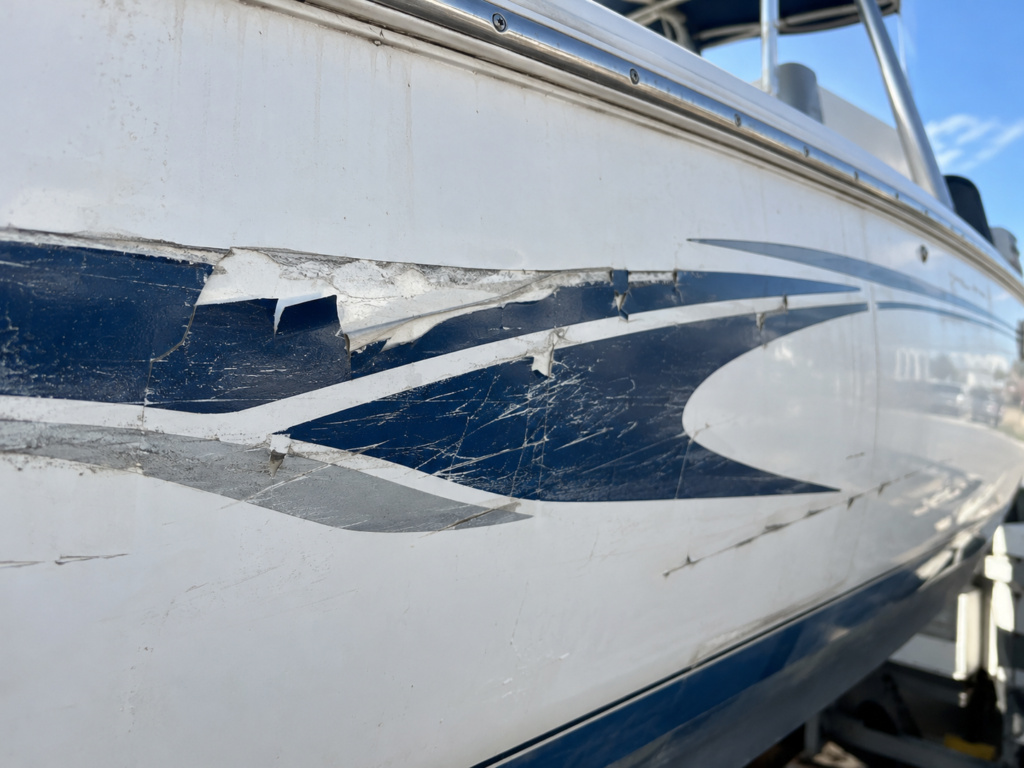
Boat wraps cover larger sections of the hull or transom with printed or colored vinyl film. Debris impacts and contact with surrounding objects can scratch, puncture, or tear these surfaces.
A shallow mark may affect only the graphic’s appearance. A deeper tear may expose the underlying gelcoat or painted finish.
Inspect the surrounding film for lifting, discoloration, and other signs of damage. If the underlying boat surface is damaged, arrange the necessary hull or finish repairs before installing replacement graphics.
Peeling or Lifted Vinyl Lettering
Boat names, registration numbers, and decorative lettering can develop loose edges or detach after physical impacts.
Check whether individual letters remain securely attached and whether their edges lie flat against the surface.
Lifted lettering can collect dirt and moisture, making the damaged area more noticeable. If the adhesive bond has failed, replacement may be more practical than attempting to press the material back into place. Our vinyl boat lettering services include custom designs sized and positioned for each vessel.
Missing Boat Names and Registration Numbers
Severe weather may remove individual vinyl letters or damage identification graphics.
Compare the existing lettering with previous photographs to identify missing elements. Check that the remaining registration markings are complete and legible.
Replacement lettering should match the original dimensions, spacing, color, and layout where possible. If the original design is unavailable, a marine graphics specialist can help recreate an appropriate layout.
Damaged Transom Graphics
The transom often features a boat’s name, custom artwork, or decorative graphics. Damage may include torn lettering, scratches, missing design elements, or lifted wrap edges.
Check the entire graphic rather than focusing only on the most visible tear. Damage near hardware, corners, and film edges may influence the replacement approach.
Our custom transom graphics and wraps are designed around each vessel’s stern, available surface area, and existing hardware.
Damaged Dimensional or Illuminated Lettering
Some vessels use stainless steel letters, dimensional names, or illuminated identification systems instead of conventional vinyl.
Physical impacts can damage these components or affect their attachment points and electrical connections.
Avoid adjusting loose metal letters or operating visibly damaged illuminated lettering. A qualified professional should evaluate the attachment system and electrical components before restoration.
Can Hurricane-Damaged Boat Graphics Be Repaired or Replaced?
Some damaged boat graphics can be restored through cleaning or partial replacement, while extensive tears, failed adhesion, and damaged surfaces may require new graphics. The appropriate solution depends on the material, the location of the damage, and the condition of the remaining application.
| Type of damage | Possible solution | What affects the decision |
| Surface dirt or deposits | Gentle cleaning | Film type and manufacturer guidance |
| Minor superficial marks | Evaluate appearance and film condition | Depth and visibility of the damage |
| Missing vinyl letters | Replace affected lettering | Original font, color, size, and spacing |
| Torn partial wrap | Replace the affected section or graphic | Design continuity and surrounding film condition |
| Extensive full-wrap damage | Partial or complete rewrapping | Damage extent, film age, and color matching |
| Damaged stainless lettering | Professional assessment and possible refabrication | Attachment points and component condition |
These are general options. A marine graphics specialist should assess the specific material and installation before recommending a repair.
When Is Partial Replacement Practical?
Partial replacement may work when damage is limited to a defined section and the remaining graphics are in good condition.
For example, replacing a missing boat-name letter may be possible without reinstalling every letter. A damaged section of a larger wrap may also be replaceable if the design can be reproduced and the repair can be integrated cleanly.
However, new materials may not match older graphics perfectly. Differences in film batches, printing, sunlight exposure, and surface finish can affect color consistency.
When Is Complete Replacement Better?
Complete replacement may be appropriate when damage extends across several sections or the surrounding vinyl has deteriorated.
A new application may also make more sense when the original artwork is unavailable or a partial repair would create noticeable differences.
For large graphics, we consider the design, film condition, underlying surface, and desired finish when discussing replacement options.
Can You Clean Boat Graphics After a Hurricane?
Yes, boat graphics can often be cleaned after storm exposure, provided the vessel is safe and the graphic material remains securely attached. However, cleaning methods should match the material and manufacturer recommendations.
Begin with a gentle approach when the film is intact. Avoid abrasive brushes, aggressive scrubbing, and cleaning products that may damage the finish or adhesive.
For applicable 3M watercraft graphics, the manufacturer’s watercraft application guidance advises against directing high-pressure water at film edges because it can cause lifting.
Different products have different care requirements, so confirm the material before choosing a cleaning method.
What If Debris Has Scratched the Graphics?
First, determine whether the scratches affect only the vinyl or extend into the boat’s paint or gelcoat.
Superficial marks may be mostly cosmetic. Cuts that pass through the film or damage the underlying finish require a more detailed assessment.
Do not attempt to polish a scratch out of printed or laminated vinyl without checking the material specifications. Some abrasive compounds can permanently change its appearance.
What If the Vinyl Has Started Peeling?
Avoid pulling or repeatedly pressing lifted film edges.
Once the adhesive bond has been compromised, the appropriate solution depends on the film, the cause of lifting, and the condition of the substrate.
A professional can determine whether the section can be addressed using an approved method or should be replaced.
How Much Does It Cost to Replace Damaged Boat Graphics?
The cost of replacing damaged boat graphics depends on the size of the affected area, the design, materials, surface preparation, and installation requirements.
Replacing one vinyl letter involves a different scope of work than recreating custom transom artwork or installing a new hull wrap.
Several factors influence the estimate:
- Graphic size: Larger applications require more material and installation work.
- Design complexity: Detailed artwork, gradients, and multi-layer layouts may require additional preparation.
- Material selection: Specialty vinyl, metallic finishes, and dimensional lettering have different production requirements.
- Existing material removal: Old adhesive and damaged film may need professional removal.
- Surface condition: Gelcoat or paint repairs may be necessary before applying new graphics.
- Installation access: Vessel location, haul-out arrangements, and access to the affected surfaces can affect the project.
At Vintage Marine Graphics, we begin with the boat and the condition of the affected area. Photographs and project details help us review the scope before discussing design, production, and installation.
How Long Does Boat Graphics Restoration Take?
The timeline depends on the amount of damage, material availability, artwork requirements, and access to the vessel.
Straightforward lettering replacement may involve fewer production steps than a custom illustration or large hull wrap. Projects requiring extensive removal, surface preparation, or specialty fabrication may take longer.
If the boat also needs structural, mechanical, gelcoat, or paint repairs, coordinate those services before scheduling final graphics installation.
We can review the artwork, materials, and installation requirements once the necessary boat repairs are complete.
Should You Replace Boat Graphics Before Other Repairs?
Complete necessary structural, mechanical, electrical, and surface repairs before installing replacement graphics. Applying new lettering or vinyl over damaged surfaces can compromise the finished result.
For example, a torn hull wrap may reveal scratched gelcoat underneath. Replacing the vinyl before repairing the underlying finish could leave the original surface problem unresolved.
Similarly, reinstalling lettering on a section scheduled for repainting may result in unnecessary removal and additional work.
Coordinate the restoration process so graphics installation takes place after the underlying surface has been properly prepared.

How Can You Protect Boat Graphics From Future Storm Damage?
Routine cleaning, careful inspection, and proper storage can help maintain marine graphics. However, no vinyl wrap, lettering system, or protective finish can guarantee protection against hurricane impacts.
Check graphic edges, seams, and attachment points periodically. Address lifting or deterioration before it spreads across larger areas.
Avoid directing high-pressure water at vulnerable film edges. Follow the care instructions for the specific materials used on your vessel.
When severe weather approaches, follow official marine safety and local emergency guidance. Securing people and the vessel takes priority over protecting cosmetic finishes.
FAQs
Will Removing a Damaged Boat Wrap Damage the Gelcoat?
Professional removal can reduce the risk of surface damage, but the outcome depends on the film, adhesive, age, underlying finish, and removal process. Any existing gelcoat or paint defects may also become visible once the vinyl is removed.
Can You Recreate My Original Boat Graphics?
We can review photographs, existing artwork, and vessel measurements to determine whether a design can be recreated. Exact reproduction depends on the quality of the available references and the original materials.
Should I Replace My Boat Graphics Immediately After a Hurricane?
Address vessel safety and essential repairs first. Once the boat is stable and the underlying surfaces are ready, a marine graphics specialist can evaluate replacement options.
Can New Boat Graphics Match My Existing Wrap?
A close match may be possible when the original artwork and material specifications are available. Older films may have changed color or gloss, so a replacement section may remain slightly noticeable.
Expert Tip
Save a digital copy of your boat-name artwork, logo, and wrap design whenever you install new graphics. Keeping the original files can make future replacements easier, especially when only one section becomes damaged.
Restore Your Boat’s Graphics After Storm Damage
A hurricane can leave your boat with scratched wraps, missing lettering, torn decals, or damaged decorative finishes. Once the vessel is safe and essential repairs are complete, reviewing the condition of its graphics can help you plan the next stage of restoration.
Some damage may require only a small replacement, while larger applications may benefit from new graphics or updated artwork. The best approach depends on the existing materials, surface condition, and the appearance you want to restore.
At Vintage Marine Graphics, we create custom boat lettering, decals, marine artwork, and wrap solutions for vessels throughout Northwest Florida and beyond. If your boat graphics have sustained storm damage, contact Vintage Marine Graphics to share photographs, discuss the affected areas, and explore suitable replacement options.
You can also review our marine graphics, striping, and wrap services to learn about the types of graphics we design and install.